Why Your Gums Deserve More Than a Quick Polish
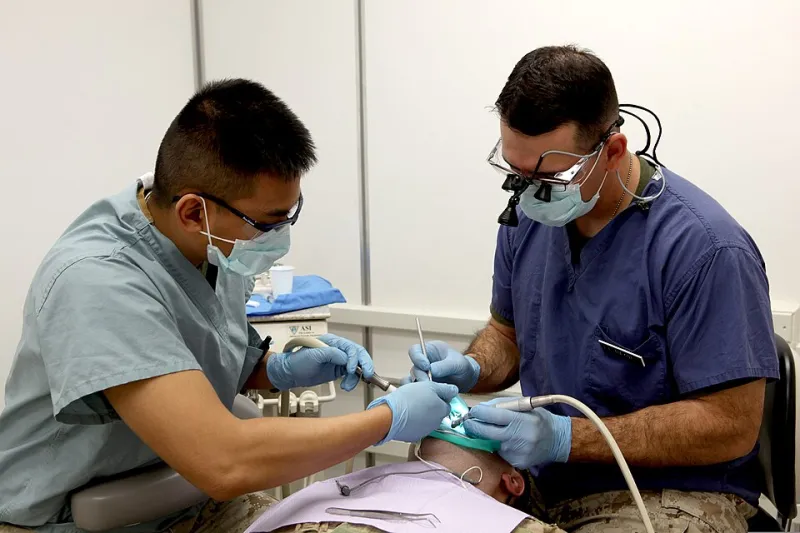
Photo: Sgt Anthony Ortiz, Public domain, via Wikimedia Commons
At Battle Road Dental, we hear it most weeks: 'I'm only here for a clean.' It is said cheerfully enough, usually while someone settles into the chair with the air of a person having a minor luxury rather than a health appointment. But that phrase does the hygienist a disservice. A hygiene visit is not the dental equivalent of a car wash. It is preventive care – and often the most useful appointment in the practice.
It is a gum check, not just a polish
A hygienist is looking at far more than tea stains. They assess your gums, the bone that supports your teeth and the bits of your mouth you cannot easily see. That means checking for bleeding, swelling and pockets around the teeth where plaque can hide. They may use a periodontal probe – a small measuring tool – to record gum health, and they will look at recession, exposed roots, the margins of fillings and crowns, and the general condition of your soft tissues.
Treatment is practical, too. Calculus – hardened plaque that no toothbrush will shift – gets removed. Staining can be polished away. More importantly, you get coaching on the awkward places: between teeth, around bridges, along the gumline at the back. A good hygienist will show you, not just tell you.
The warning signs people brush past
Gum disease is a quiet operator. It can progress without pain, which is why so many people are surprised when they are told their gums need attention. Bleeding when you brush or floss is not normal, even if it happens 'only sometimes'. Neither is persistent bad breath, redness, tenderness, receding gums or teeth that feel loose. Sensitivity at the gumline can also be a clue.
If you notice any of these, do not wait for your next routine check-up. Book and say what you have noticed. Early gum disease is far easier to manage than advanced disease, and the treatment is usually simpler.
NHS and private: different routes, same principle
In the UK, NHS and private hygiene appointments can look quite different. NHS care is based on clinical need, and what is included depends on your assessment and local availability. In England, a routine examination with a scale and polish may fall within Band 1, while more involved periodontal treatment can sit in Band 2; charges and rules are worth checking with reception. Private appointments often allow longer sessions, more frequent maintenance, and extras such as airflow polishing or tailored periodontal programmes.
Neither route is automatically 'better'. The important questions are: what is being checked, what is being treated, how often should I return, and what will it cost? Ask those before you book.
Why the diary matters
Plaque regrows quickly, and once it hardens into calculus it stays put until a clinician removes it. If you have a history of gum disease, your maintenance interval may need to be shorter than the standard six months. That is not a sales pitch; it is risk management. Preventing gum problems is almost always cheaper and kinder than treating them later.
Questions worth asking at your next visit
- What were my gum pocket readings, and are they changing?
- Is there any bleeding, and what does it mean?
- Am I cleaning between my teeth effectively?
- Is this staining, decay or something else?
- What would you do differently at home?
- What are my NHS and private options, including costs?
- When should I come back, and why then?
A hygiene appointment should leave you with a cleaner mouth and a clearer plan. If it has been a while, do not wait for pain. Gums rarely complain until they are cross. Book the visit, ask the questions, and let your hygienist keep your gums honest.