White Noise: A Calm, UK-Style Guide to Whitening Without the Hype
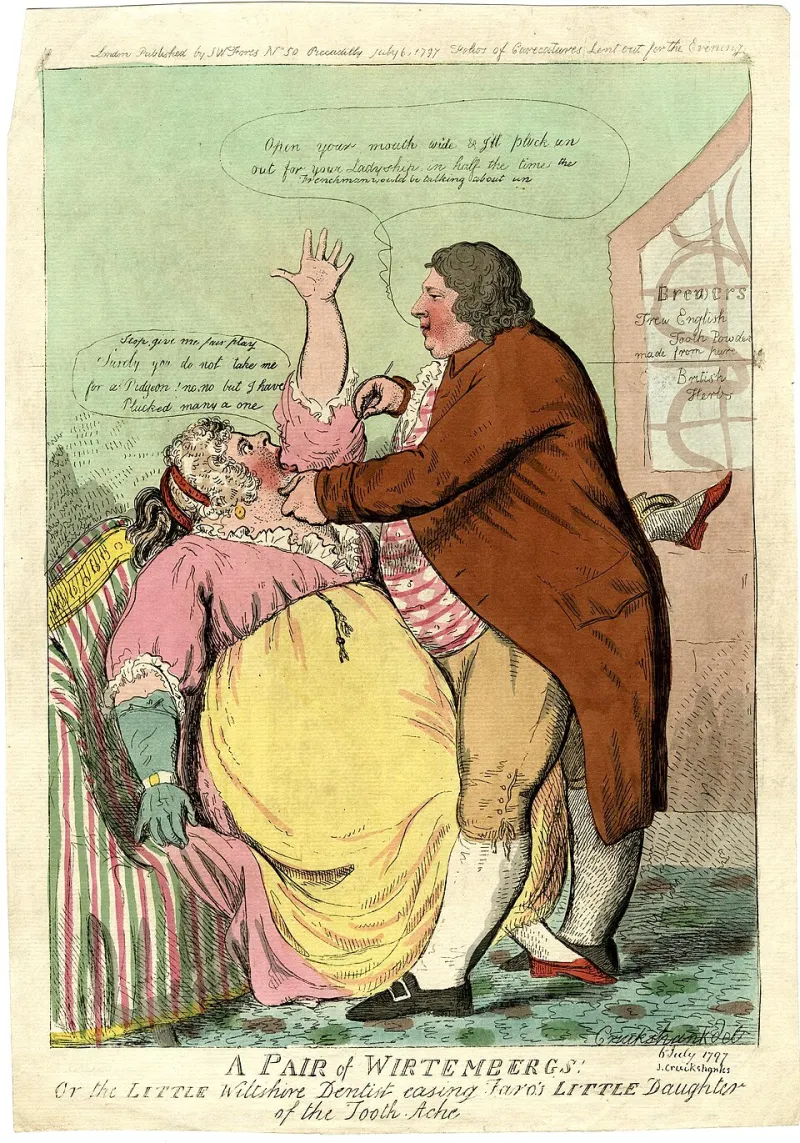
Photo: Print made by: Isaac Cruikshank Published by: S W Fores, Public domain, via Wikimedia Commons
Whitening is one of those topics that seems to follow you around. There is a boxed kit by the till, a salon offering a 'whitening facial' on the high street, and an influencer promising a shade brighter by Friday. It is easy to feel like everyone else has cracked it and you are somehow late to the party. The truth is calmer than the marketing suggests. Whitening can be a genuinely useful cosmetic treatment, but in the UK it is also a regulated dental procedure — and that distinction matters more than most adverts let on.
The law is on your side — use it
Here is the bit that surprises a lot of people: in the UK, teeth whitening using products that contain or release more than 0.1% hydrogen peroxide is legally a dental treatment. That means it should only be carried out by a registered dental professional — a dentist, or a hygienist or therapist working under a dentist's prescription — and only after a proper examination. Beauty salons and mobile whitening technicians offering stronger gels are not just cutting corners; they are operating outside the law. The General Dental Council has been clear about this for years, and prosecutions have happened.
Why the fuss? Because whitening is not a spa treatment. It involves a chemical that can irritate gums, cause temporary sensitivity and, if used carelessly on teeth with untreated decay, gum disease or damaged enamel, lead to problems that cost far more to fix than the whitening itself. A dentist's job is to check that your mouth is healthy enough for the treatment, that any fillings or crowns are sound, and that you understand what the gel will and will not do. Skipping that step is a false economy.
Surface stains versus real bleaching
Part of the confusion comes from the word 'whitening'. It gets used for two quite different things. The first is stain removal: a scale and polish at the dentist, or a whitening toothpaste that gently lifts everyday colour from tea, coffee, red wine and tobacco. That is cosmetic housekeeping, and it can make a real difference to how clean your teeth look. The second is bleaching, where a peroxide-based gel actually changes the intrinsic colour of the tooth. That is the treatment people mean when they talk about going a few shades lighter.
Over-the-counter products in the UK are limited to very low concentrations — no more than 0.1% hydrogen peroxide — so their bleaching effect is modest by design. Dentist-supplied gels can go up to 6% hydrogen peroxide, which is why they are more effective and also why they need supervision. If a kit promises dramatic results from a supermarket box, treat that claim with polite skepticism.
The DIY shelf: hope, grit and a little acid
Charcoal toothpaste, bicarbonate of soda, lemon juice, strawberry rubs — the internet has no shortage of home whitening ideas. Some are harmless but useless. Others are actively unkind to enamel. Charcoal is abrasive, and scrubbing it across your teeth every day can wear away the very surface that keeps them looking bright. Bicarbonate is also abrasive in the wrong hands. Lemon juice is acidic enough to soften enamel, and brushing straight afterwards is a bad combination. None of these approaches changes the underlying colour of a tooth; they mostly polish, and sometimes damage.
That does not mean all home kits are dangerous. Custom trays made by your dentist, used with the correct gel and clear instructions, are a well-established way to whiten gradually at home. The key difference is that they are prescribed for your mouth, not bought on a whim.
What can you actually expect?
Realistic whitening is rarely a Hollywood smile. Most people see a few shades of improvement, and the result varies depending on the starting colour of your teeth, the type of staining and how consistently you use the treatment. Existing crowns, veneers and composite fillings will not lighten, so if you have visible restorations you may need to plan for those to be replaced afterwards to keep the colour even. Sensitivity is common during treatment, usually temporary, and your dentist can adjust the gel strength or frequency if it bites.
Whitening is also not permanent. Tea, coffee, wine and the simple passage of time will gradually dull the result, which is why a maintenance plan — occasional top-ups, sensible stain management, regular hygiene visits — matters more than a one-off blast.
Picking a safe option without a lecture
Start with a check-up. It is the least glamorous step and the most important. Your dentist can confirm whether whitening is suitable, treat any decay or gum inflammation first, and explain the realistic shade change for your teeth. Ask about the peroxide concentration, whether custom trays are included, and what aftercare is provided. Be wary of deals that skip the examination, promise a fixed number of shades for everyone, or use before-and-after photos that look suspiciously airbrushed.
At Battle Road Dental, we would rather have a five-minute conversation about expectations than see someone undo good enamel with a bargain kit. Whitening is a dental treatment, not a beauty add-on, and it works best when it is planned rather than impulse-bought.
The takeaway
You do not need to avoid whitening — you just need to approach it with the same common sense you would use for any health treatment. Check the legal status of the provider, start with a dental examination, choose a supervised gel over a mystery box, and keep your expectations grounded. A brighter smile is a nice thing. A healthy one is the point.